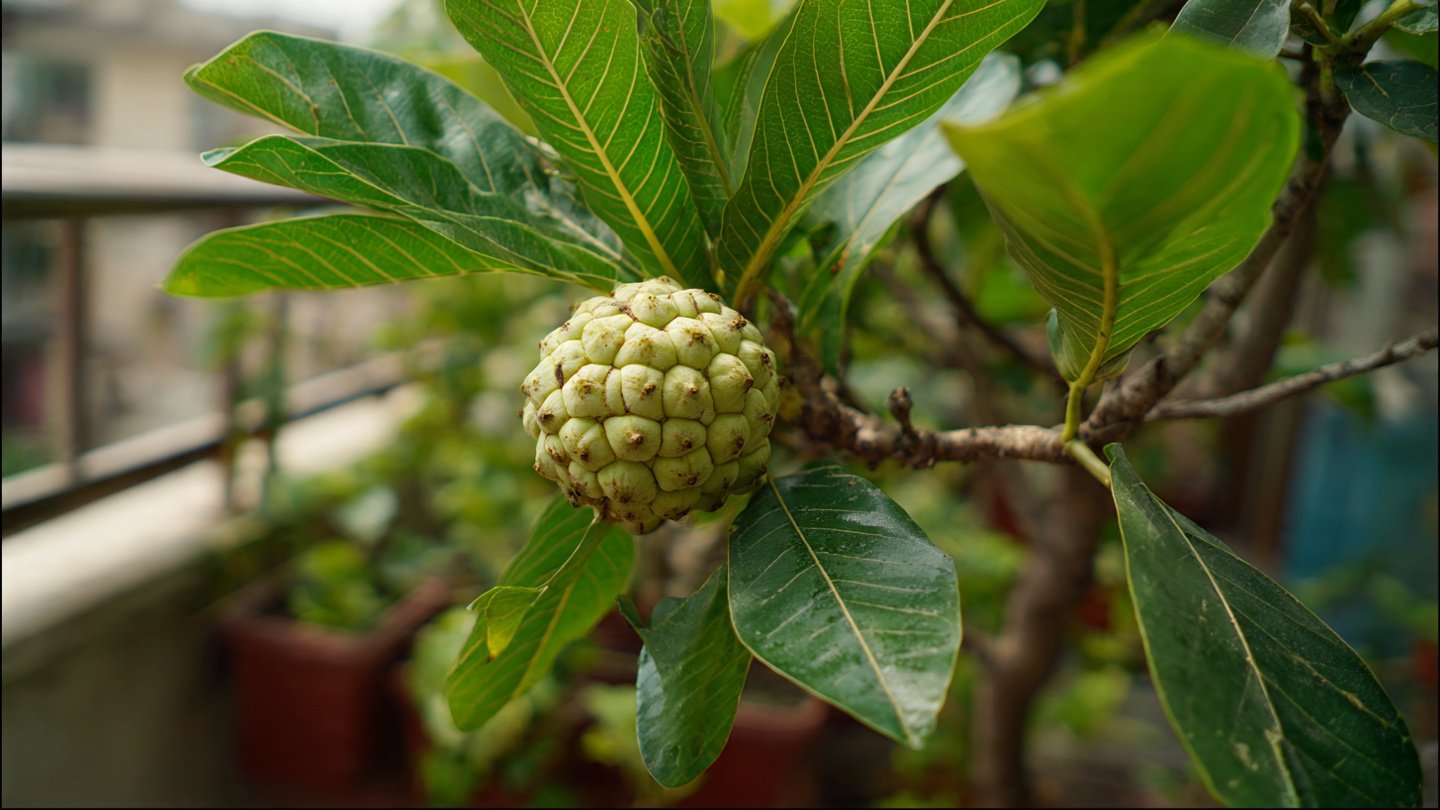
Growing custard apples (Annona squamosa) on your balcony can be a rewarding endeavor. Known for their creamy texture and sweet flavor, custard apples are tropical fruits that thrive in warm climates but can also adapt to container gardening. This guide will walk you through the essentials of growing custard apples on your balcony, covering everything from planting to harvesting.
Understanding Custard Apples
Custard apples, often referred to as cherimoya or sugar apples in various regions, are part of the Annona family. These soft, greenish fruits are characterized by their sweet, custard-like flavor and grainy texture. They contain numerous seeds and are rich in vitamins and minerals, making them a popular choice among fruit enthusiasts.
Latest Posts
- How to Use Invisible Wire for a Stunning Climbing Plant Wall
- Are Your Garden Tools Making Your Plants Sick?
- How to Style a Small Studio with Columnar Cacti
- Why Is My Zucchini Shaped Like a Lightbulb?
- How to Protect Your Fruit From Birds Without Nets
- How to Keep Squirrels Away from Your Fruit Trees
- How to Protect Your Fruit from Birds Without Nets
- Why Biochar Is a Game-Changer for Your Kitchen Garden
- Why Some Rare Cacti Bloom Only One Night a Year
- How to Grow Rare Blue Strawberries at Home
Climate Requirements
Custard apples thrive in warm, tropical climates. Ideally, they prefer:
- Temperature: 15°C to 30°C (59°F to 86°F). They cannot withstand frost.
- Light: Full sun exposure for at least 6 hours a day.
Container Selection
Since you’re growing custard apples on a balcony, choosing the right container is crucial. Here are a few guidelines:
- Size: Select a large container, at least 15 gallons, to accommodate the roots and allow for healthy growth. The bigger the better!
- Material: Opt for materials like clay or plastic that provide good drainage. Ensure the container has drainage holes to prevent waterlogging.
- Mobility: If your balcony experiences varying amounts of sunlight throughout the day, consider using a movable pot to relocate the plant as needed.

Soil Preparation
Custard apples thrive in well-draining, nutrient-rich soil. Here’s how to prepare a suitable potting mix:
Recommended Soil Mix
- Composition: A blend of potting soil, compost, and perlite or sand for aeration.
- pH Levels: Aim for slightly acidic to neutral pH levels (around 6.0 to 7.0).
Steps for Soil Preparation
- Mix Ingredients: Combine equal parts of potting soil, compost, and perlite in a large bucket or wheelbarrow.
- Test pH: Use a pH meter or kit to ensure the soil falls within the recommended range.
- Fill the Container: Fill your prepared container, leaving about an inch of space from the top.
Planting Custard Apples
Once your container is ready, it’s time to plant your custard apple sapling.

Choosing the Right Seedling
You can either grow custard apples from seeds or purchase a seedling. Buying a grafted seedling is advisable for faster fruit production and better disease resistance.
Planting Process
- Dig a Hole: Make a hole in the center of the pot deep enough to accommodate the root system.
- Remove from Pot: If you purchased a sapling, gently remove it from its original pot, trying not to disturb the roots too much.
- Place in Hole: Position the sapling in the hole, ensuring the graft union (if present) is above the soil line.
- Fill with Soil: Cover the roots with the prepared soil mix and gently press down to eliminate air pockets.
- Water Thoroughly: Water the plant thoroughly after planting to settle the soil.
Watering and Fertilization
Custard apples have moderate water needs and require regular moisture to thrive.
Watering Schedule
- Frequency: Water the plant once or twice a week, allowing the top inch of soil to dry out between watering sessions.
- Signs of Overwatering: Yellowing leaves and root rot. Ensure that excess water drains out of the pot.

Fertilization
Custard apples benefit from a balanced fertilizer, which encourages healthy growth and fruit production.
- Type of Fertilizer: Use a slow-release organic fertilizer with a higher ratio of nitrogen and potassium. A 3-1-1 or 4-1-1 NPK ratio is ideal.
- Frequency: Fertilize every 6 to 8 weeks during the growing season, typically spring through summer. Reduce feeding in fall and winter.
Sunlight and Positioning
For optimal growth, ensure your custard apple plant receives adequate sunlight.
Sunlight Requirements
- Ideal Position: Place the pot in a location where it can receive direct sunlight for at least 6 to 8 hours a day.
- Adapting to Seasonal Changes: Monitor the sun’s path across your balcony and reposition the plant as necessary to avoid shade, especially during winter months.
Pruning and Maintenance
Pruning plays an essential role in maintaining the health and productivity of your custard apple tree.
When to Prune
- Timing: The best time to prune is in late winter or early spring, just before the growing season begins.
Pruning Techniques
- Remove Dead or Diseased Growth: Carefully cut away any unhealthy branches to promote overall health.
- Shape the Tree: Trim to encourage a bushy shape that can easily fit on your balcony while allowing sunlight to reach all parts of the plant.
- Thin Out Branches: Remove any overcrowded branches within the canopy to enhance air circulation.
Pest and Disease Management
Like any other fruit tree, custard apples can be vulnerable to pests and diseases.
Common Pests
- Aphids: Tiny insects that may affect new growth; wash them off with water or apply insecticidal soap.
- Mealybugs: Look for cottony masses on stems; treat with neem oil or rubbing alcohol.
Diseases
- Root Rot: Caused by overwatering; improve drainage and adjust your watering schedule.
- Powdery Mildew: White fungal growth on leaves; improve airflow and consider using fungicide if the problem persists.
Harvesting Custard Apples
Knowing when to harvest is key to enjoying the fruits of your labor.
Signs of Ripeness
- Color Change: The skin of the custard apple will turn a light green to yellowish hue.
- Softness: Gently press the fruit; it should feel slightly soft but not mushy.
- Fragrance: A sweet aroma indicates that the fruit is ready to be picked.
Harvesting Process
- Use Garden Shears: Cut the fruit from the stem using clean, sharp garden shears.
- Handle with Care: Avoid applying too much pressure, as custard apples bruise easily.
Conclusion
Growing custard apples on your balcony is not only a delightful project but also a way to enjoy fresh, organic fruit at home. By following this comprehensive guide—from soil preparation and planting to care and harvesting—you can successfully cultivate these delicious tropical fruits in a limited space. Enjoy the process, experiment with care techniques, and soon enough, you’ll be savoring the sweet, custard-like flavor of your own homegrown custard apples! Happy gardening!